


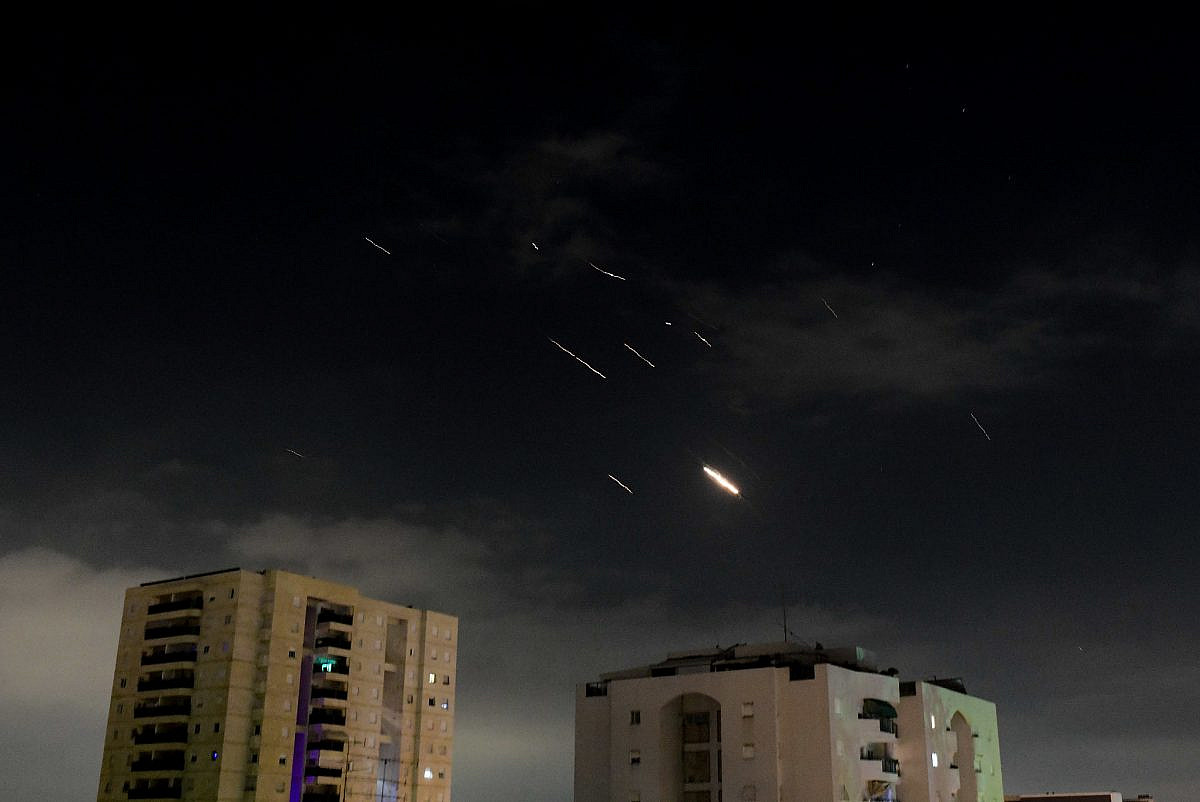


Two days on, the world is still trying to make sense of Iran’s dramatic attack on Israel. In concert with its regional partners, Iran’s Islamic Revolutionary Guard Corps (IRGC) unleashed more than 300 drones and missiles on the night of April 13, marking the first time Israel or Iran had targeted the other state on its own soil.
While unprecedented in character, Iran’s attack was by no means unexpected, coming in the wake of Israel’s airstrike on the Iranian consulate in Damascus two weeks earlier, which had killed seven IRGC officers and two civilians. The vast majority of the projectiles, some of which took several hours to arrive, were intercepted by Israel, aided by the armies of the United States, the United Kingdom, France, and Jordan, and intelligence provided by several Gulf states. Only a handful of the missiles managed to evade Israel’s defenses, including one that seriously wounded a 7-year-old Bedouin girl in an unrecognized village in the Naqab/Negev, and another that caused minor damage to the Nevatim air base…..more